Wild boar and bitter chocolate.
That combination deserves a moment.
At Il Conte Matto in Trequanda, the dish is called cinghiale in dolceforte. Along with the cocoa come raisins, pine nuts, candied citrus and red-wine vinegar. It is a wonderfully unexpected thing to encounter when you think you know what Tuscan cooking tastes like.
My mind went straight to Mexico. Was there a connection to mole?
The conversation that followed took me toward Artusi, the Medici, old Florentine kitchens and the story that Tuscany had taught the French to cook. Suddenly, dinner had opened a door into a completely different world.
But let me start with what brings me to this table in the first place.
It’s the simple things, stupid.
I mean that affectionately. Mostly as a reminder to myself.
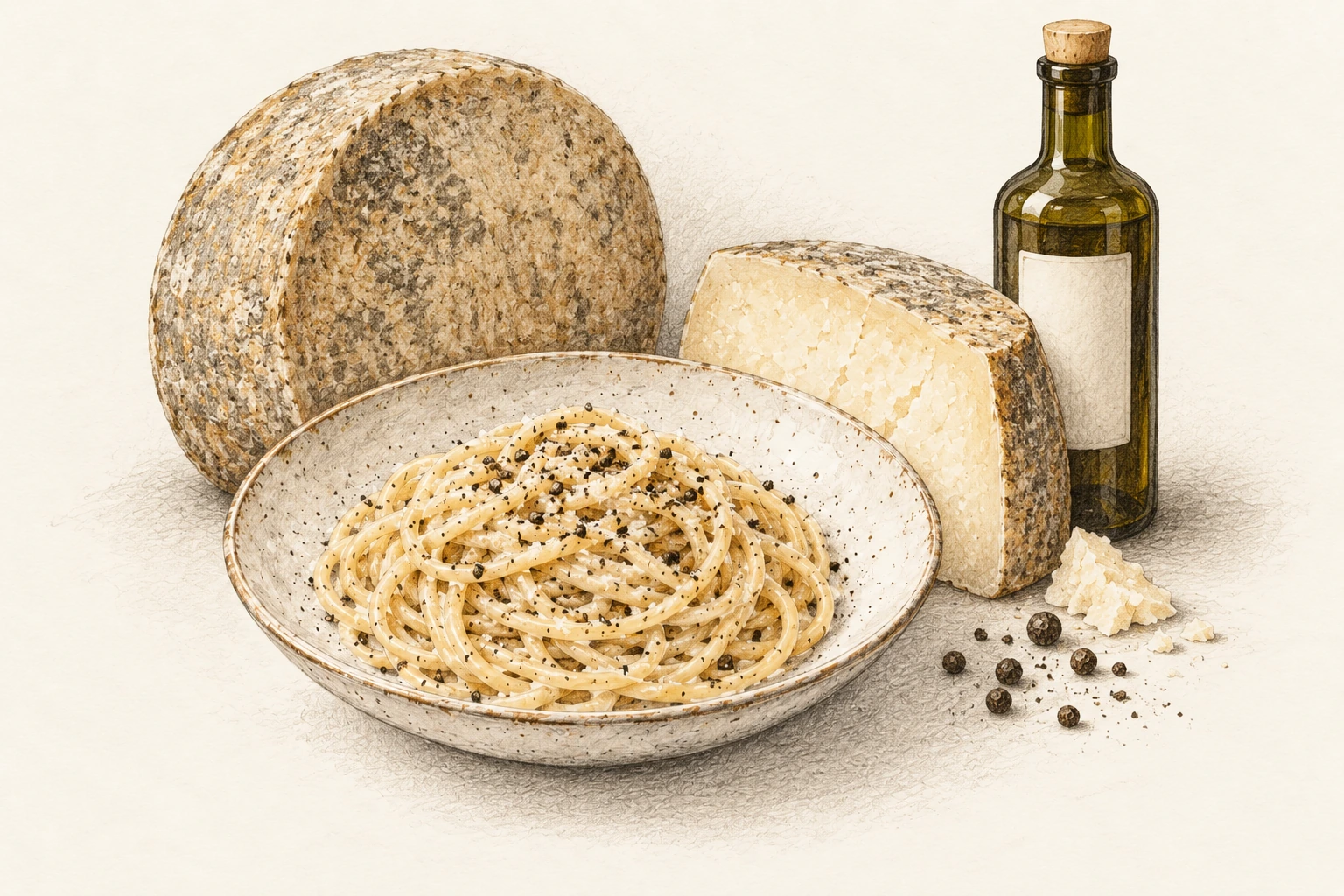
Pici. A little pomodoro. Aglione*. Some old bread turned into crisp breadcrumbs. A little cheese.
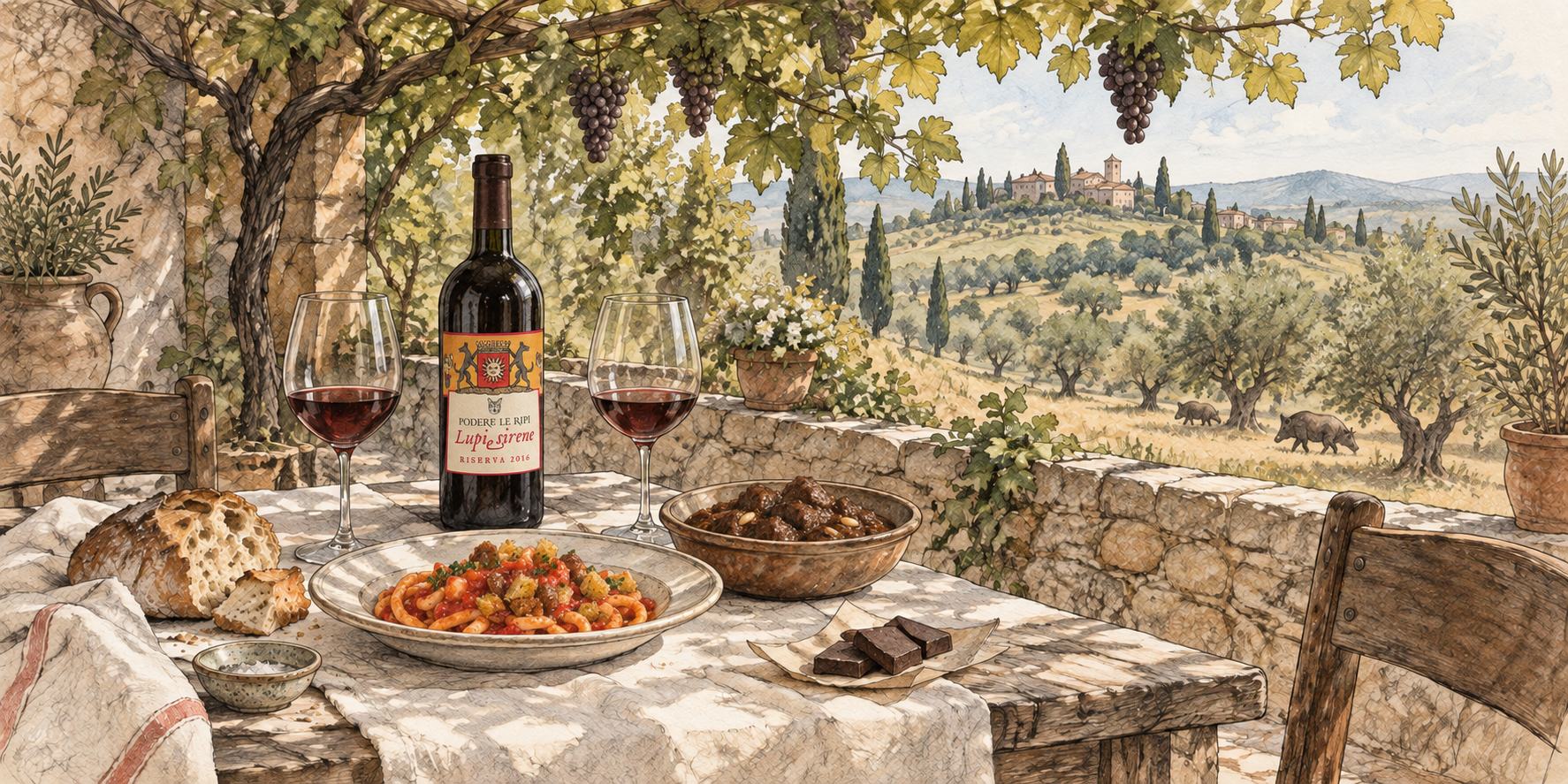
A good glass of Rosso, or Brunello if the day calls for it.
For me, this is one of the most wonderful meals you can eat. You can make your case for cacio e pepe, and I will listen. My Tuscan soul still votes for pici.
Il Conte Matto calls them Lunghetti (Pici), with crisp parsley breadcrumbs. 1
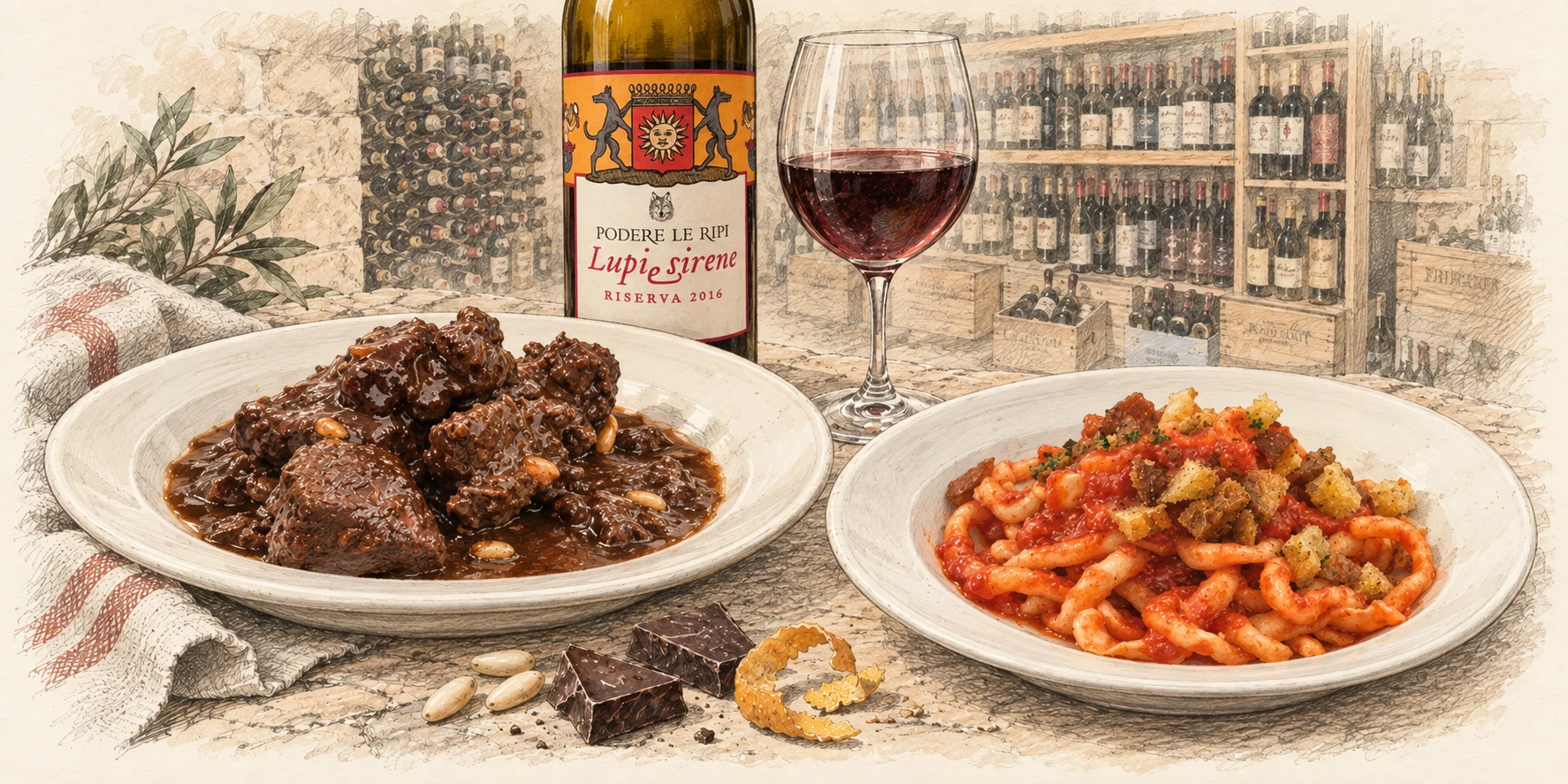
Then the wild boar.
Il Conte Matto has a wonderful wine cellar, too. We paired the dolceforte with a 2016 Lupi e Sirene, the Brunello di Montalcino Riserva from Podere Le Ripi.
The cocoa catches me because of the role it plays. Here, it works almost as a spice, joining the fruit, nuts and vinegar in seasoning the meat. An ingredient I instinctively associate with dessert suddenly makes sense in the middle of dinner.
I wanted to understand how it got there.
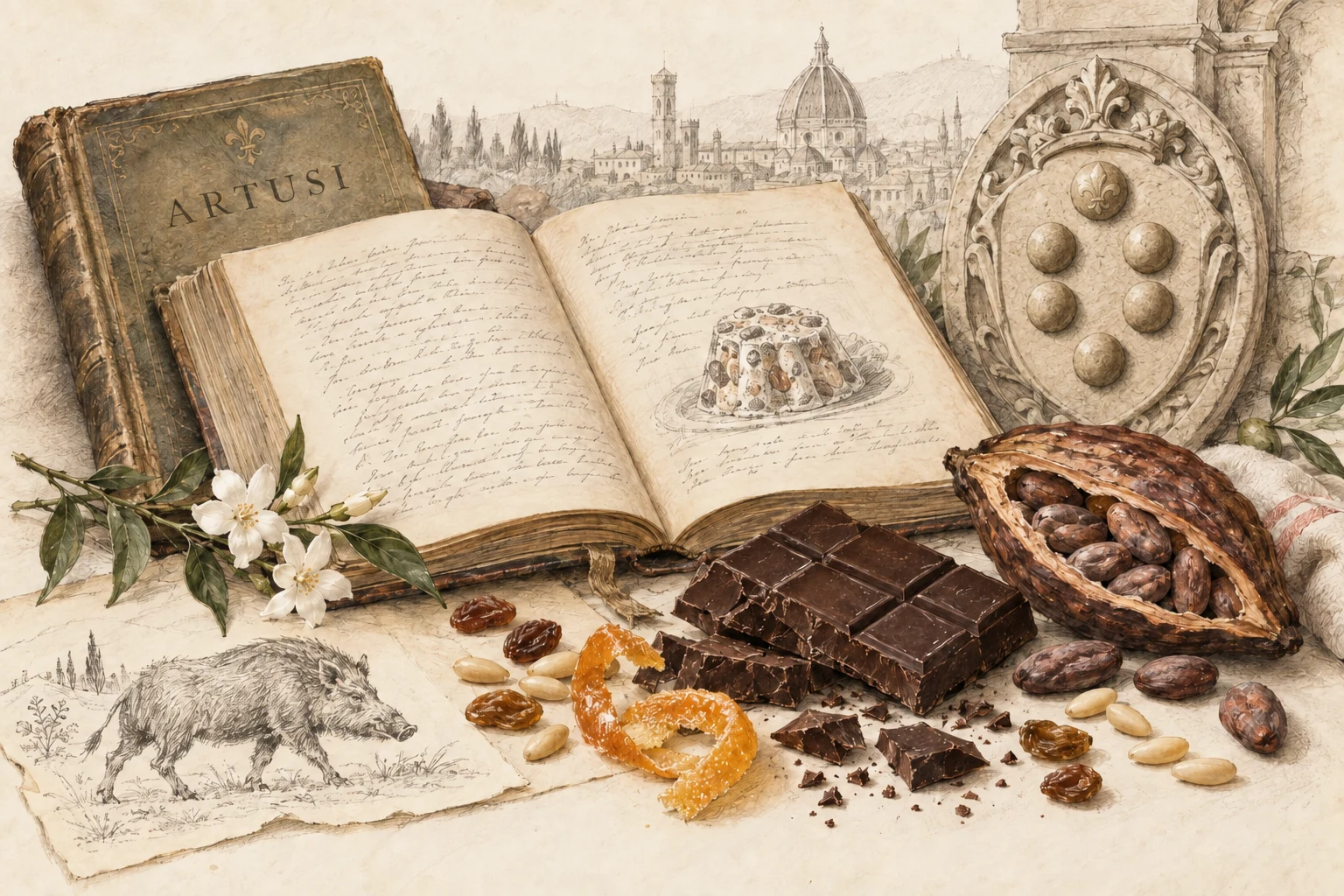
Pellegrino Artusi offers a tangible connection. His La scienza in cucina e l’arte di mangiar bene, first published in 1891, records a recipe for wild boar with chocolate, raisins, pine nuts, candied fruit, sugar and vinegar. He even advises that it is better made a day ahead. 3
That detail makes me smile. Across more than a century, someone is still giving us useful advice about tomorrow’s dinner.
Artusi helped gather and popularise Italy’s regional cooking traditions. He gives this dish a place in the written record, though its history reaches beyond his cookbook.
A recipe. A legend. An ocean.
The French story needs a little more care. The familiar tale of Catherine de’ Medici arriving in France with Florentine cooks and transforming French cuisine is a later legend. As historian Susan Pinkard explains, European court kitchens already shared many techniques and a taste for elaborate combinations of sweetness, spice and meat. 4
My Mexican question remains open too. I found no documented trail showing that Tuscan dolceforte descended from mole.
Yet cacao itself had travelled from the Americas. Seventeenth-century Italian cooks experimented with chocolate in savoury as well as sweet dishes, and the Medici court embraced it enthusiastically. A jasmine-scented chocolate associated with Francesco Redi became a closely guarded secret. 5
The long way home
An ingredient crosses an ocean. Another kitchen finds something new to do with it. Generations later, it appears on a menu in Trequanda, where it prompts someone to ask about Mexico.
Tuscany is my retreat. Its food, its wine and these conversations are part of why it feels like home.
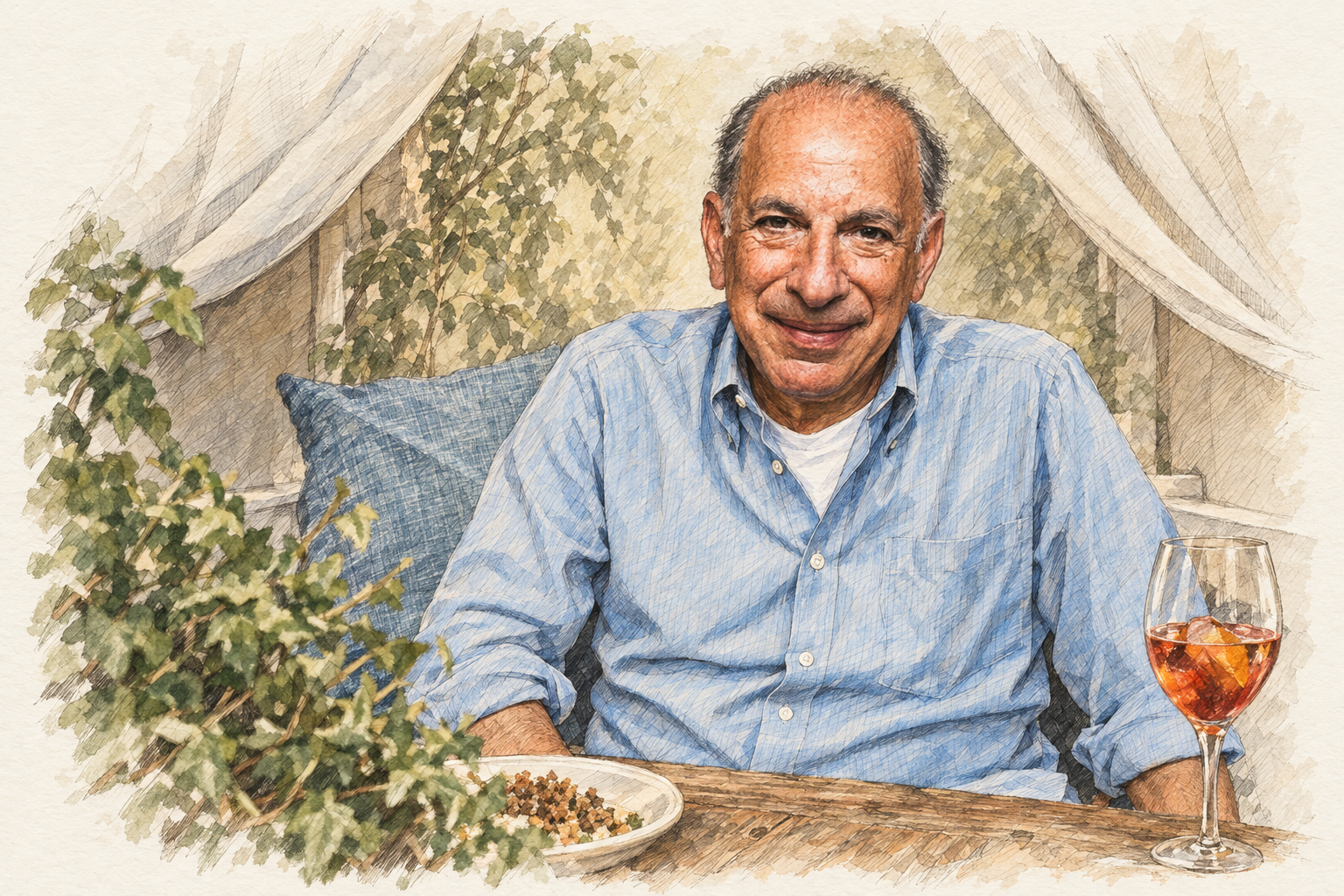
My friend Robert came all the way from the US years ago and found my Tuscan wonderland. He decided to stay. We bought a house.
The New York lawyer is now a local, and we keep finding new adventures together.
Thank you, Robert.
Brother, friend and consigliere.
The wishing tree
And then there is the tree.
Near Pieve a Salti, a dusty path climbs to a solitary holm oak. People tie little folded notes to its branches, each carrying a wish. Over the years, more and more have found their way there.
I don’t know who started it. I like that people keep it going.
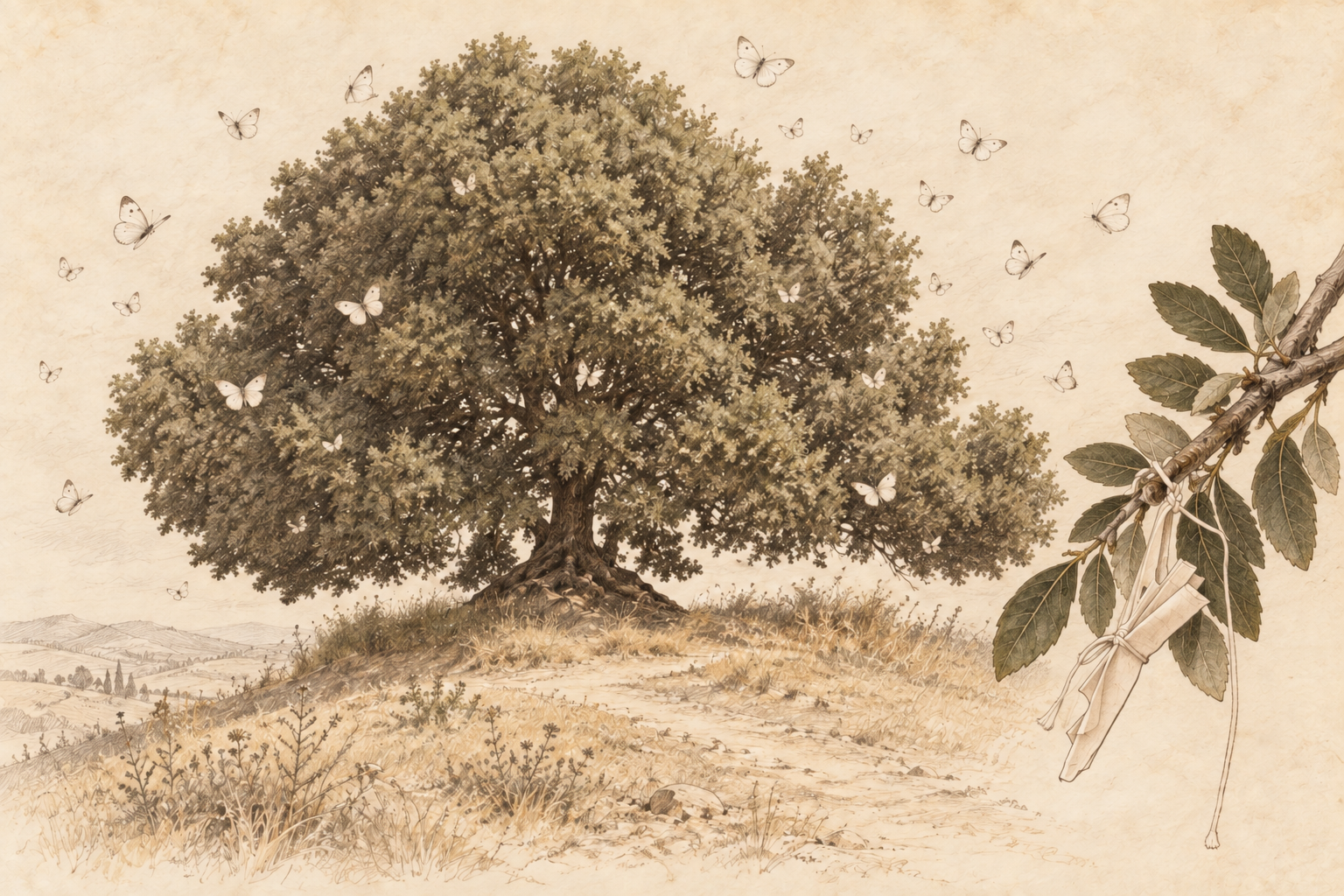
Redrawn from my photograph of 10 July 2018.
One day, the air around the tree was full of white butterflies. I remembered it as spring. Then I found my photograph: 10 July 2018.
Memory had kept the butterflies and misplaced the season.
There they were, above the crown and between the branches, tiny white wings against the dark leaves and the blue sky. Eight years later, I still wonder what brought them there.
The wishes keep arriving. I hope a few have come true.
I love my Tuscan home.