01 November 2022 · Singularity
A different
perspective.
In November 2022, after the Covid years, I took part in the Singularity Executive Program.
I came home looking at our machines differently. What could AI, robotics and our knowledge of production make possible together? What would we have to rethink to get there?
I took those questions into production halls. Customer visits gave them something to work against.
02 January–February 2024 · Las Vegas / Verona
A product
in my head.
In January 2024, Roland Busch’s CES keynote on AI and the industrial metaverse reinforced that direction. The connection between the physical and digital worlds was becoming increasingly concrete. I kept thinking about what it could mean for us.
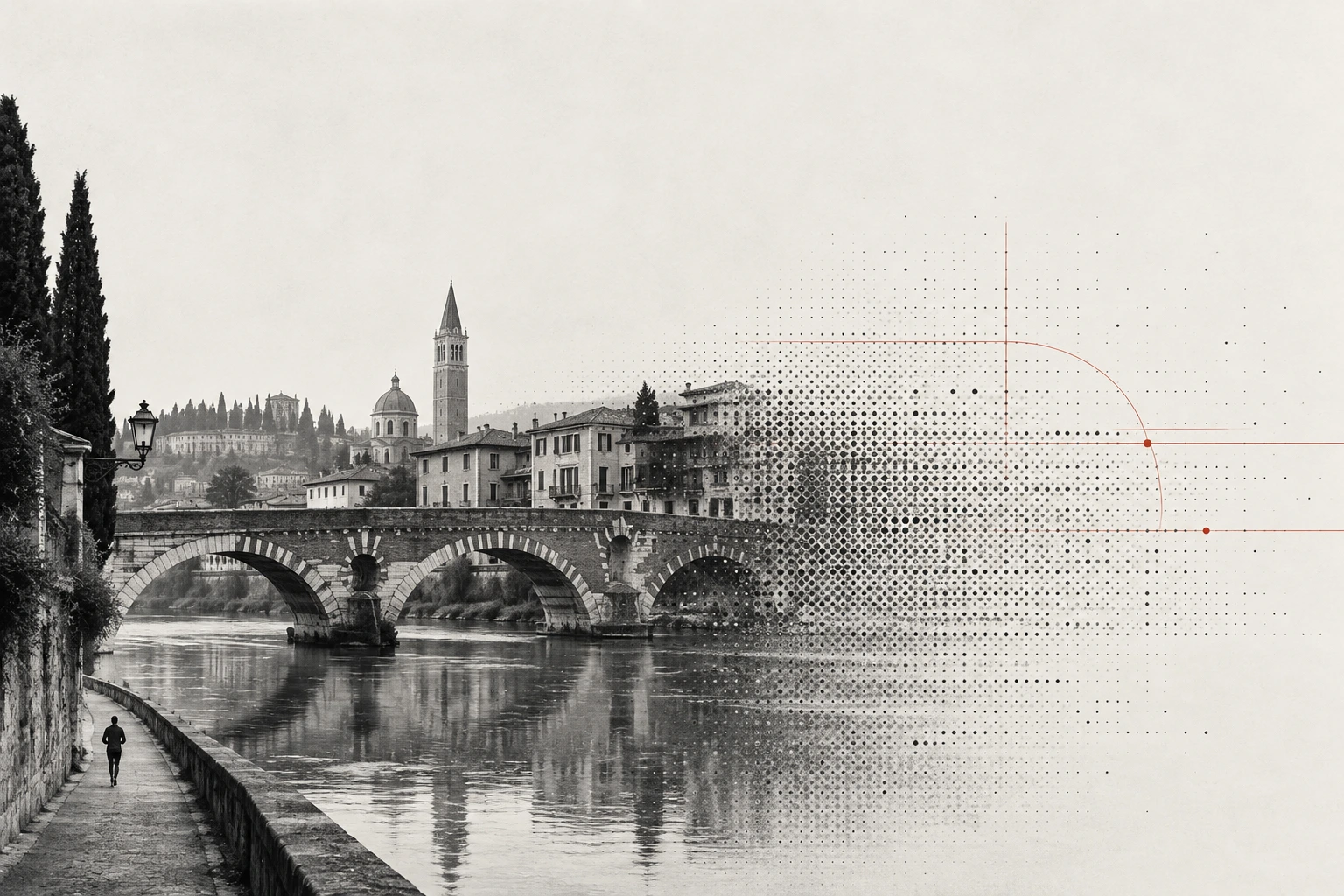
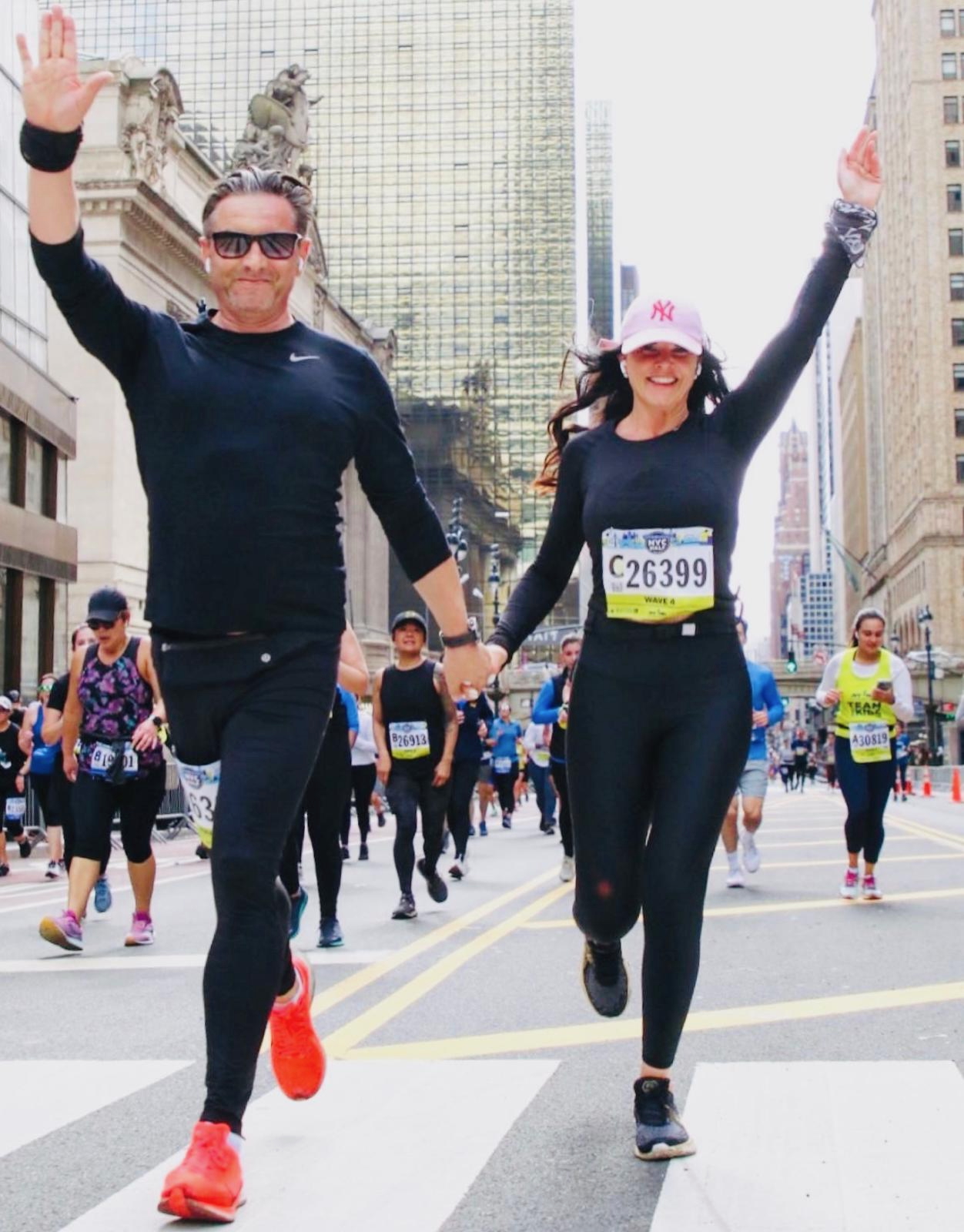
A few weeks later, around Valentine’s Day, I was running in Verona. A customer problem was still occupying my head, and I kept turning it over: what would have to change for production to handle this itself?
That was when it became a product in my head.
I could begin to picture something we could build, something that would connect what our machines knew with the decisions being made around them. The work ahead was still enormous, but the idea had acquired a shape.
The early work had a name: Nexum. It would take a long time, several versions and plenty of disagreement before it became Kyveris.
The name has a story of its own: A name worth the trouble. ↗
03 Customer visits · Barolo and beyond
Highly automated.
Still so much to learn.
I remember a visit to a label and packaging specialist in the Barolo region, one of my favourite wine regions. Beautiful labels. Modern production lines. Engineering of extraordinary precision.
And at every line, several stations for visual inspection. Then another check. And another.
The machines did their jobs exceptionally well. But the systems were not learning from what the operators kept seeing. The knowledge that connected a defect to its cause, a material to its behaviour, one decision to the next, lived in people’s heads.
We had automated the work.
The learning still depended on people.
That was the gap I could not leave alone. What would it take for the next job, the next operator or the next shift to benefit from what had just been learned?
Afterwards came one of the best meals I can remember, and a wonderful Barolo tasting. That did not exactly make me think smaller.
Other visits brought me back to the same question. Taiwan, Europe, the United States. Label printers, conversations at drupa, colleagues trying to solve a different part of the problem. Each added something. Some also exposed how much I had left unexplained.
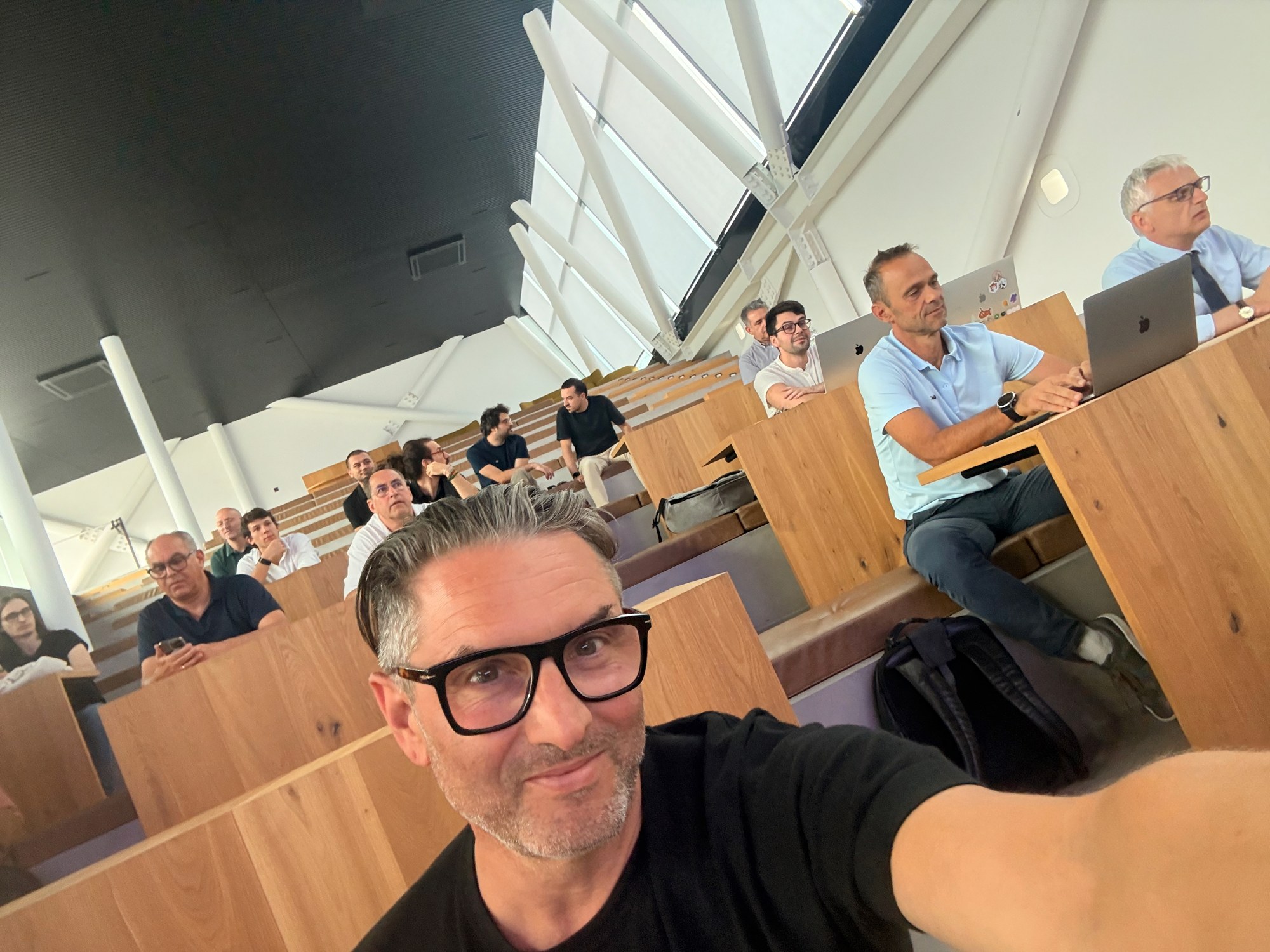
There were notebooks filled and abandoned, versions rewritten, enthusiasm followed by frustration. I kept testing whether I was seeing a real opportunity or simply becoming attached to an idea I liked.
My team challenged the practical assumptions. Rachel challenged how I explained it, which often revealed that the thinking itself still needed work.
A360, Peter Diamandis and that community kept stretching the thinking that had begun at Singularity. I would come home with larger possibilities in my head. Then I had to explain what they would mean for the person running the next job.
04 The idea takes shape
Industrial
Intelligence.
Gradually, I began using the words Industrial Intelligence to describe what I was trying to bring together.
Physics
What happens.
Flow
How it connects.
Sense
What it means.
Physics: what actually happens inside the machine and when ink meets a material. Flow: how jobs, files, machines and people move through production. And sense: the ability to understand what is happening, learn from it and decide what should happen next.
Connecting systems would not be enough. The connection had to help someone make a better decision, and eventually carry a bounded decision itself. That would have to be earned, job by job.
05 December 2025–January 2026 · Tokyo / Las Vegas
Let reality
answer.
By December 2025, in Tokyo, the work had become more concrete. I wrote a version there that became an important foundation for Kyveris, shaped by the customer visits and by what we saw at iREX.
Tokyo was useful because it corrected us. We had gone there with high expectations for humanoid robotics. What we saw forced us to reconsider what would actually be ready to work on a print floor, within the time we had.
Philip has described that change of direction in From Hands to Systems. For me, it was an important discipline: stay ambitious enough to pursue the idea, and remain willing to change the way you build it.
Two years after the 2024 keynote, CES in January 2026 brought another important confirmation.
Watching Roland Busch on stage, joined by Jensen Huang, reinforced something that had been taking shape for a long time. Siemens and NVIDIA were describing how AI could work across real industrial systems, connecting simulation, engineering and operations. The discussion around Physical AI brought the consequences into focus.
Intelligence in the physical world has to deal with materials, tolerances, heat, movement and people. A wrong decision can become a damaged substrate, a stopped line or a safety problem. Understanding the process matters as much as the ability to compute.
I recognised our world in that discussion. Years of building machines, understanding materials and listening to customers suddenly looked even more relevant to what was coming.
CES gave me confirmation. It also raised the standard: conviction would have to become something we could test, explain and put to work.
06 June 2026 · Brixen
Bring it home.
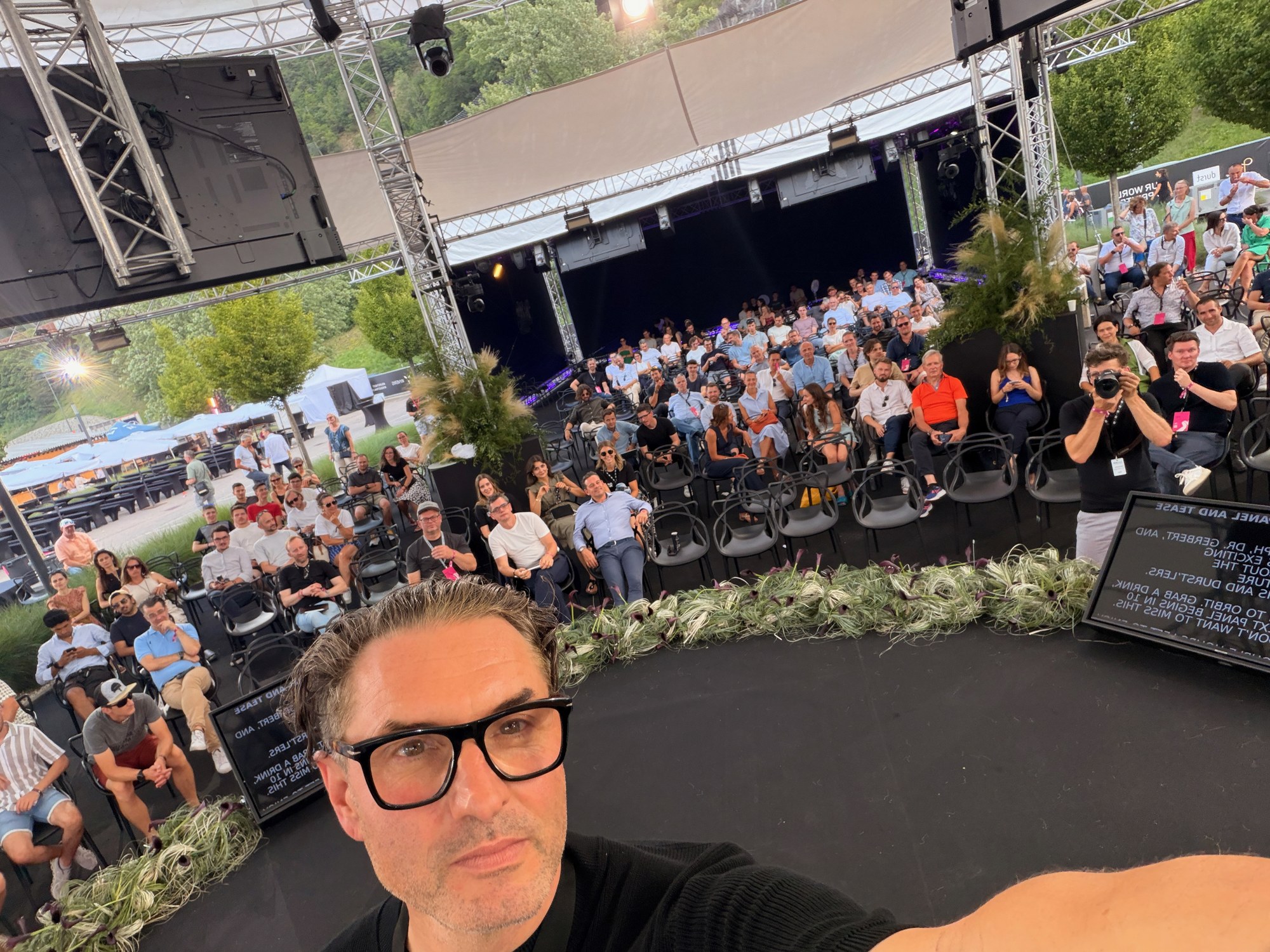
By the time I stood on stage in Brixen for Durst NEXT, during our ninetieth anniversary, that journey had become the subject of my keynote: The Economies of Orchestration.
I spoke about people acting as the connection between systems that could not understand each other. About production knowledge going home at the end of a shift. And about the work required to make machines, software and experience contribute to a system that can learn.
Before a machine can learn, the organisation has to learn.
That includes us. We have to change how our teams work together, how we listen to customers, how we test assumptions and how honestly we describe what is ready. The same willingness to rethink that brought us here has to survive the moment we give the idea a name.
Kyveris is still being built. We are learning where useful assistance ends, where a system can take a bounded action, and what evidence customers need before they will trust it with more. There is considerable work between those stages.
The idea has changed because people challenged it. It will have to keep changing as we put it to work.