A memoir · Prologue & Chapter One
Business Class
and Cold Coffee.
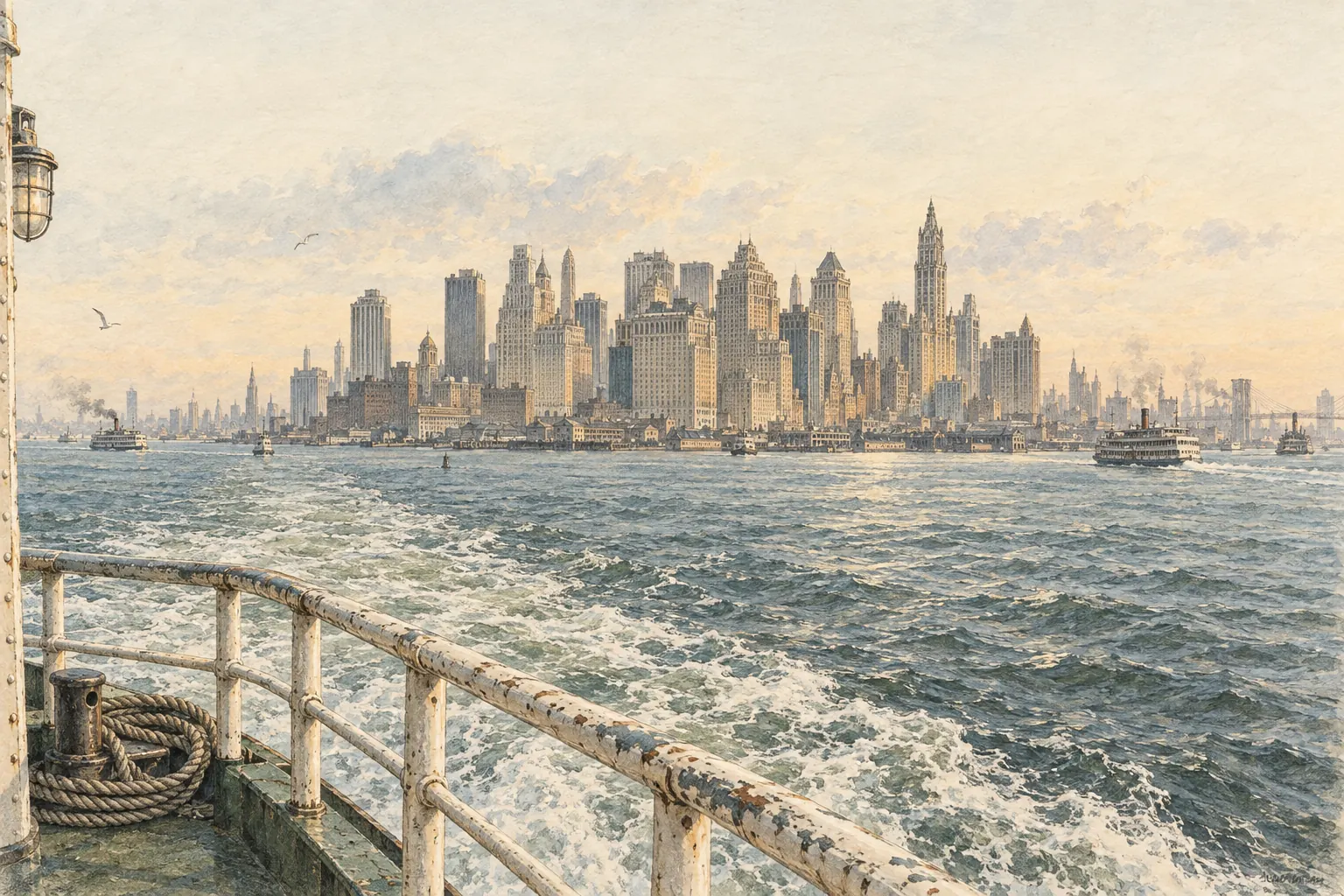
The Boy Who
Knew Everything
The Benedictine monks at Marienberg believed in discipline, Latin, Greek, and the considerable virtues of getting up early. I believed in books. This occasionally created problems.
Once a monk discovered me reading under the blanket with a small lamp. My punishment was to get up even earlier for prayers. I found this a rather contradictory way to discourage reading, but nobody had asked for my opinion on the educational system.
We could not simply leave the monastery during the week. Every second weekend we saw our parents. It sounds severe. But it also gave me a rare luxury: time to read. I devoured books, and gradually came to the conclusion that I knew a great deal about the world.
Years later, New Jersey and Manhattan would correct that misunderstanding.
Chapter One
The Wrong Side
of the Atlantic
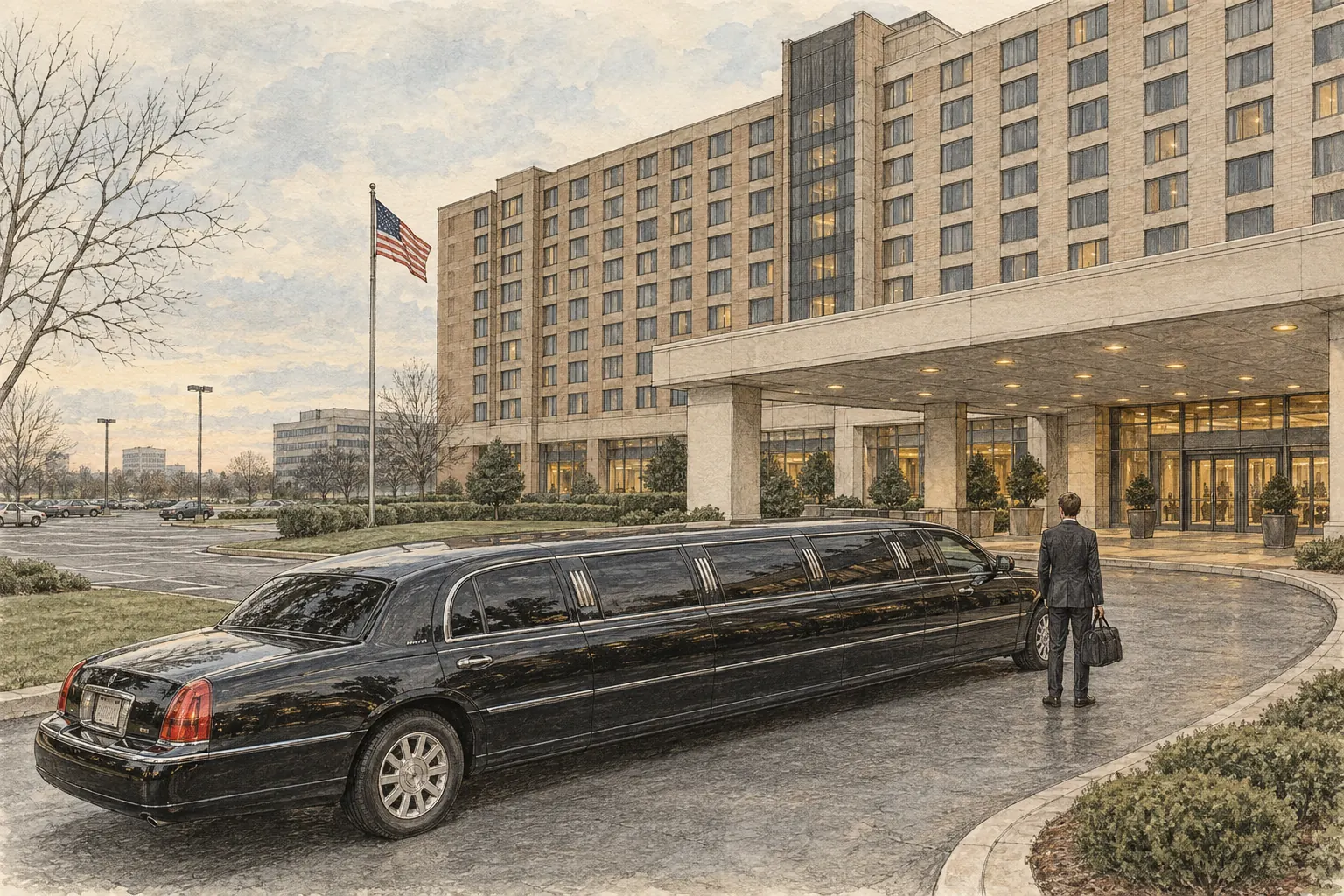
The limousine was considerably longer than anything I had achieved in my professional life.
It was waiting outside Newark Airport, black, polished, and entirely disproportionate to my actual importance.
I had arrived on a Virgin Atlantic flight that felt more like a performance than transport. Richard Branson, I thought, had understood something about showmanship. I liked that.
I was young, ambitious, and reasonably sure that I understood how the world worked.
I had, after all, been educated by Benedictine monks.
What could possibly surprise me?
Quite a lot, as it turned out.
For reasons I still don't fully understand, someone had decided that a young Tyrolean with an Italian passport required a limousine approximately the length of a regional train.
I sat in the back looking out at New Jersey, wondering whether I was supposed to feel important.
I mostly felt lost.
The hotel didn't improve matters. It was one of those enormous American corporate establishments where the corridors seemed to continue indefinitely and the furniture had been selected by a committee determined not to offend anyone.
Everything worked. Everything was comfortable. Everything was enormous.
And everything felt slightly unreal.
Then came TGI Fridays.
I remember sitting at the bar, which was already a cultural revelation. In Italy, a bar was where you drank an espresso, perhaps a glass of wine, and discussed the decline of civilization.
In America, apparently, you could have dinner there.
The steak was enormous. The drinks were enormous. The televisions were enormous. Even the enthusiasm of the bartender seemed to have been manufactured in industrial quantities.
There was a television personality called Guy Fieri, whom I encountered through American food culture. A man with extraordinary hair, an extraordinary voice, and apparently no interest whatsoever in understatement.
At the time, I found the whole phenomenon rather alarming.
Only much later would I discover that he was an exceptionally capable businessman. Even more improbably, years afterwards, I would receive a signed cookbook and a recorded greeting from him as a wedding present.
Life has a peculiar sense of humor.
But that first evening in New Jersey, I was simply trying to understand what had happened to dinner.
People talked to me.
Strangers.
The person on my left wanted to know where I was from, the person on my right seemed interested in my life story, and within minutes someone might invite you to a barbecue.
Where I came from, an invitation to someone's home was a significant event. In America, it seemed to mean that someone liked you for the next thirty seconds.
It was confusing.
So were the women.
I was young, single, and, if memory serves correctly, a reasonably handsome Tyrolean Italian boy.
American women had a directness I wasn't entirely prepared for. I had grown up in a culture where romantic interest was communicated through a long and elaborate system of glances, misunderstandings, and strategic silences.
Here, people simply talked to you.
It was all terribly efficient.
I wasn't sure that I approved.
New Jersey had introduced me to America.
Large cars, large hotels, large steaks, and invitations to barbecues that may or may not have existed.
Then I went to Manhattan.
New Jersey was America. Manhattan was the world.
I had a friend called Peter who had helped build Profoto's American business and was exceptionally well connected. Not the kind of connected where someone occasionally recognizes you. Properly connected.
He knew photographers, studio owners, creative directors, models, and people who knew all the other people.
And he decided to show me his New York.
This was not the New York of sightseeing buses and observation decks.
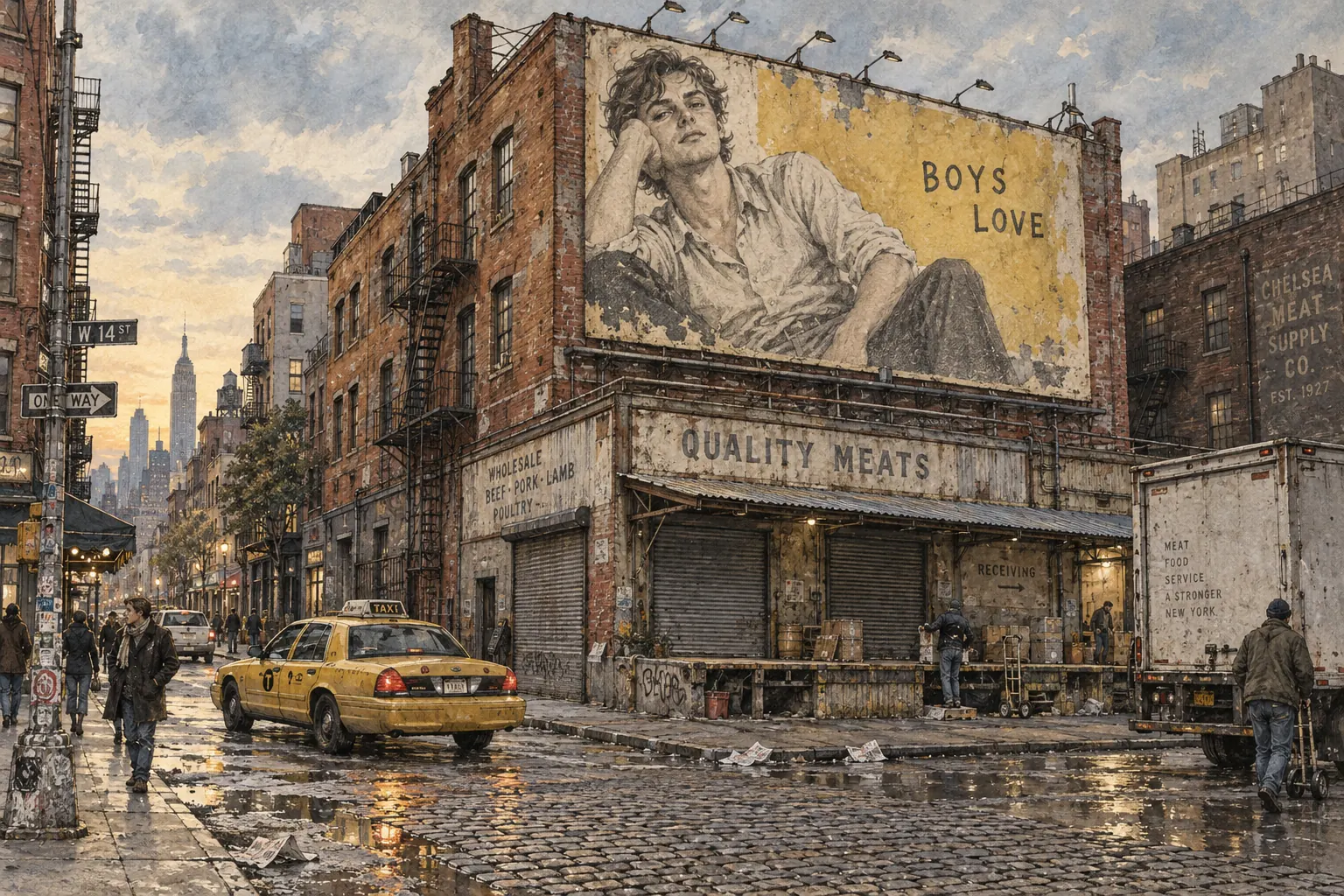
This was downtown, the Meatpacking District.
And at the time, there was still actual meatpacking going on.
That detail matters.
The old industrial city and the new creative city were occupying the same streets. There was something wonderfully unfinished about it.
Peter took me through the neighborhood, introducing me to places I would never have found alone.
At one point we ordered gabagool.
Gabagool?
I knew perfectly well what it was: capocollo.
The food was excellent. The people were fascinating.
These Italian-Americans spoke a version of Italian culture I had never encountered. Their language, their rhythm, their sense of Italy had evolved into something entirely their own.
And yet, despite all those differences, they welcomed me with a warmth that felt instantly familiar.
It was my first lesson in something I would come to love about New York: identity wasn't necessarily something you had to defend. It could be something you shared.
Then we went to the Maritime Hotel.
The Maritime had originally served the shipping community, with its round windows like a ship that had somehow run aground in Manhattan.
The rooftop terrace was something else entirely.
There were models, a remarkable number of models.
There were photographers, producers, publicists, creative people, people who appeared to have invented their own professions.
And Peter knew them.
He introduced me.
One conversation led to another.
Somewhere between gabagool and the skyline, something opened.
I had spent years reading about the world, learned Latin and Greek, imagined distant civilizations, and suddenly I was sitting in one.
And realizing how little I knew.
It was magnificent.
And slightly embarrassing.
In most places, being a foreigner requires an explanation.
In New York, it felt like a credential.
I had arrived for a job interview.
I left with an appetite.
For cities, for people, for the unknown.
And for the first time in my life, not knowing felt like an opportunity.